

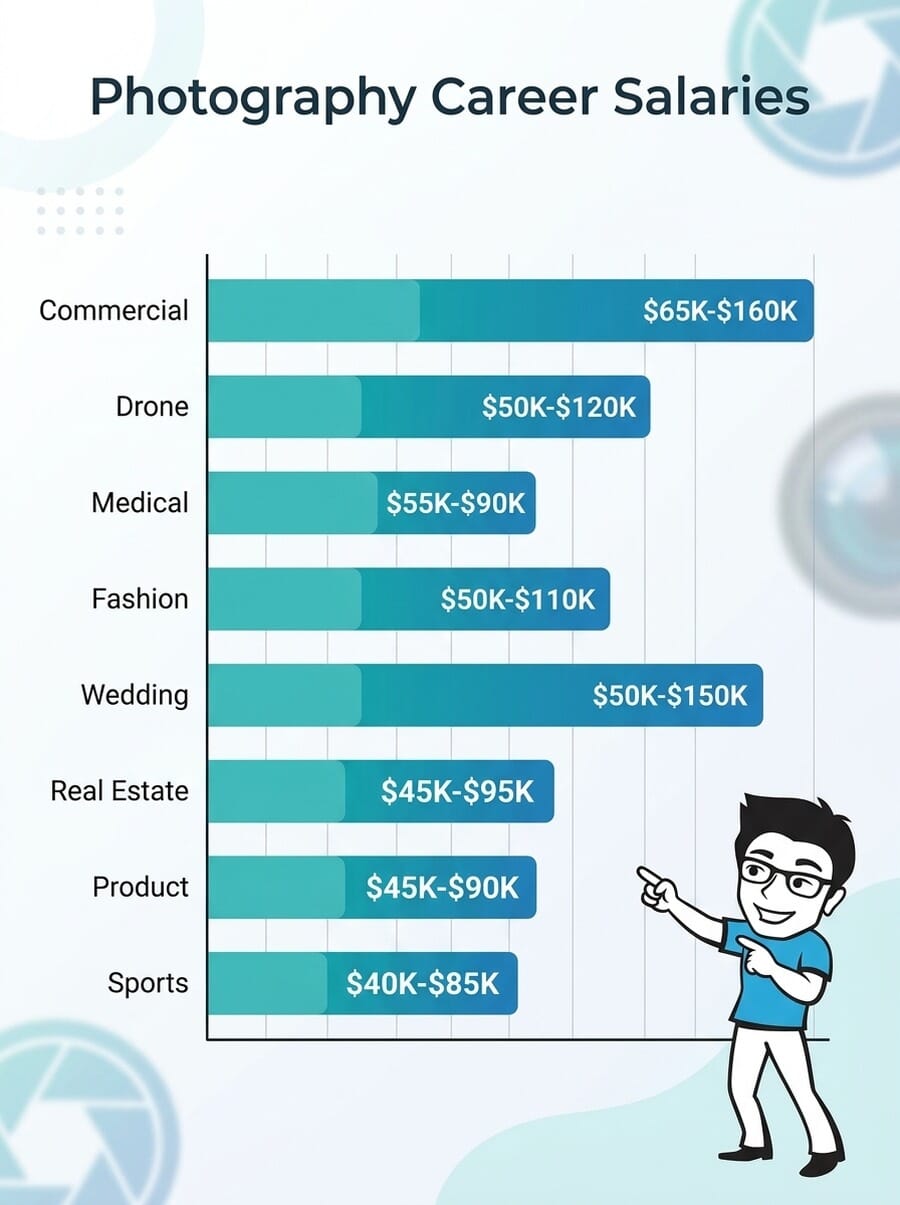
- Commercial and advertising photography tops the list at $65,000–$160,000+, with licensing fees that can double your income from a single campaign.
- Drone/aerial photography pays $50,000–$120,000+ and benefits from high barriers to entry (FAA Part 107 certification, specialized equipment).
- New AI-adjacent roles — AI training photographer, prompt-assisted retouching, AI creative director — are creating hybrid careers paying $50,000–$160,000.
- Freelancers earn 30–60% more than salaried photographers on average, but sacrifice benefits, stability, and paid time off.
- The BLS median photographer salary is $42,520/year, but top earners in specialized niches regularly exceed $100,000.
The Photography Job Market: What’s Changed
The photography industry looks different than it did even two years ago. AI-generated imagery has disrupted stock photography and some basic commercial work — but it has simultaneously increased demand for authentic human photography and specialized skills that AI cannot replicate.
According to the U.S. Bureau of Labor Statistics (May 2024 data), the median annual wage for photographers is $42,520 ($20.44/hour). But that number masks enormous variation — top 10% earners make over $94,700, while the bottom 10% earn under $29,600. There were approximately 151,200 photography jobs in 2024, with 66% of photographers being self-employed.
The field is projected to grow 2% through 2034 (slower than average), but roughly 12,700 openings are expected annually from workforce turnover. The key to earning well isn’t just technical skill — it’s finding the right niche and positioning yourself where human creativity is irreplaceable. According to a recent AOP industry survey, 58% of photographers have reported losing work to AI, making specialization more critical than ever.
Here’s our comprehensive breakdown of the highest-paying photography jobs, with refreshed salary data and new sections on AI-adjacent roles and freelance income benchmarks.
| Photography Specialization | Salary Range (USD) | Key Requirements |
|---|---|---|
| Commercial & Advertising | $65,000 – $160,000+ | Portfolio, licensing knowledge, client relationships |
| Drone/Aerial Photography | $50,000 – $120,000+ | FAA Part 107, specialized equipment |
| Medical & Scientific | $55,000 – $90,000 | Certification, medical knowledge |
| Fashion Photography | $50,000 – $110,000+ | Portfolio, industry connections |
| Wedding Photography | $50,000 – $150,000 | People skills, endurance, backup gear |
| Real Estate & Architectural | $45,000 – $95,000 | Wide-angle lenses, HDR skills, drone optional |
| Product & E-commerce | $45,000 – $90,000 | Studio lighting, post-processing |
| Sports Photography | $40,000 – $85,000+ | Fast reflexes, telephoto lenses, credentials |
| Photojournalism | $35,000 – $75,000 | News sense, ethics, deadline skills |
| Portrait & Family | $35,000 – $80,000 | People skills, marketing ability |
| AI-Adjacent Roles (NEW) | $50,000 – $160,000 | Photography + AI/tech skills |
1. Commercial & Advertising Photography
Salary Range: $65,000 – $160,000+ annually
Commercial photography remains the gold standard for high-earning photographers. These photographers create images for marketing campaigns, corporate communications, brand content, and advertising. The work spans everything from product shots for e-commerce listings to multi-day advertising campaigns for global brands.
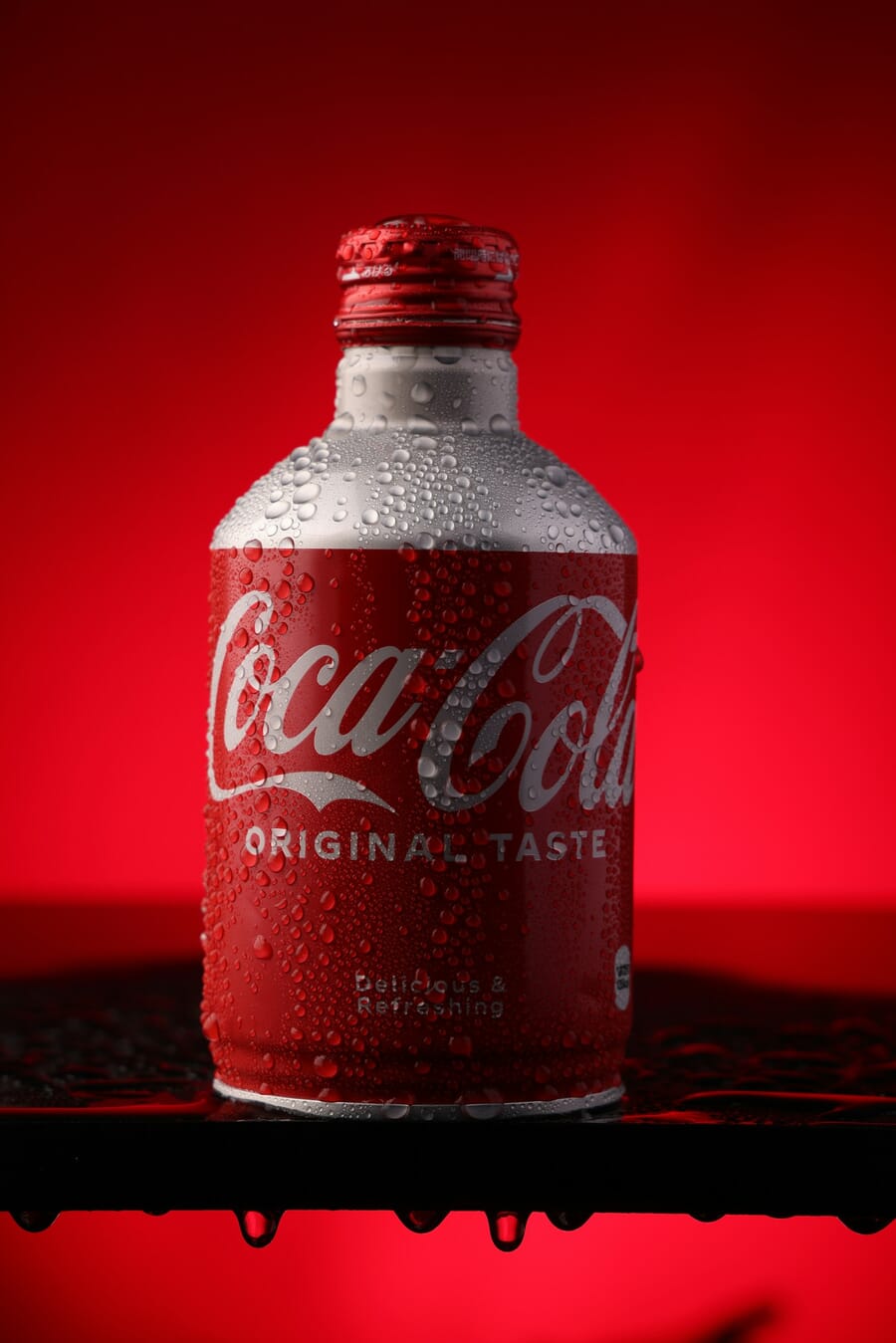
What makes commercial photography so lucrative isn’t just the day rate — it’s the licensing fees. When you shoot for a major brand, usage rights can dwarf your initial shooting fee. A single image licensed for a national billboard campaign might generate $10,000–$50,000 in licensing revenue alone.
The AI factor: AI has actually helped some commercial photographers. Brands increasingly want “authenticity” that AI can’t provide — real people, real products in real settings. Many clients now specifically request human-shot content to differentiate from AI-generated imagery.
Demand outlook: Strong and growing. The shift toward authentic brand storytelling, combined with the explosion of digital marketing channels, keeps demand high. Photographers who understand both how AI is changing photography workflows and traditional shooting techniques are especially valuable.
How to break in: Build a portfolio in a specific niche (food, automotive, tech products), assist established commercial photographers, and learn to negotiate licensing agreements. Understanding usage rights is as important as your camera skills.
2. Drone & Aerial Photography
Salary Range: $50,000 – $120,000+ annually
Drone photography has matured from a novelty into one of the highest-paying photography specializations. The BLS now specifically includes drone operation as a core photographer task, and demand spans real estate, construction, agriculture, infrastructure inspection, and film production.
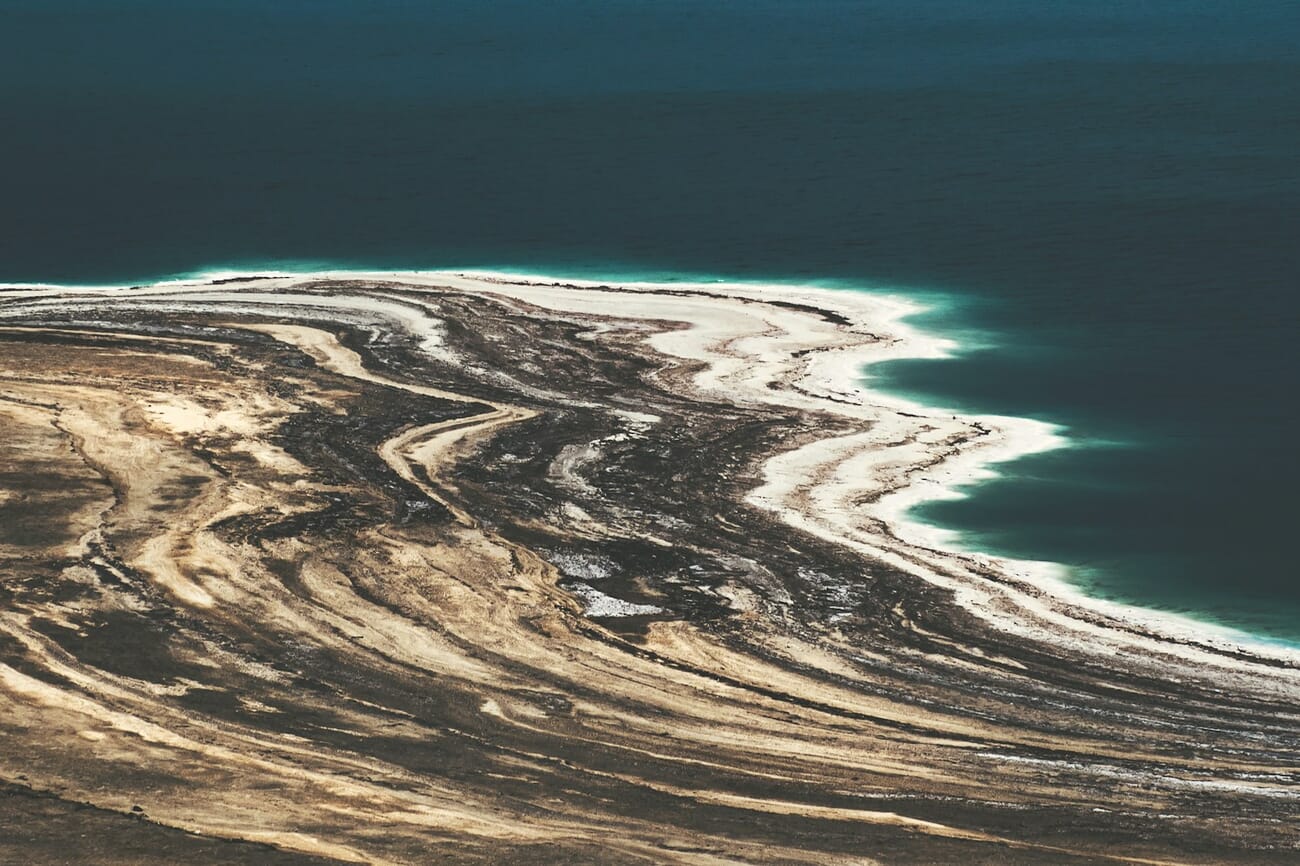
What makes drone photography lucrative is the barrier to entry. You need FAA Part 107 certification, quality equipment ($2,000–$15,000+ for professional drones), and liability insurance. This keeps casual competition at bay while demand continues to grow.
Top-paying drone photography niches:
- Construction & infrastructure documentation: $500–$2,000 per site visit
- Real estate aerial tours: $200–$500 per property
- Film & television production: $1,000–$5,000+ per day
- Agricultural mapping: $15–$30 per acre
- Insurance & legal documentation: $400–$1,500 per assignment
Demand outlook: Rapidly growing. ZipRecruiter data shows real estate drone specialists averaging $55,463 annually, with top earners reaching $100,000+. Construction and infrastructure inspection pay the most with the most consistent volume.
Getting started: Obtain your Part 107 certificate (study time: 2–4 weeks), invest in a quality drone with a reliable gimbal camera, and build a portfolio. Real estate is the easiest entry point, but construction and infrastructure pay better with more consistent work.
3. Medical & Scientific Photography
Salary Range: $55,000 – $90,000 annually
Medical photography is the hidden gem of photography careers — offering stable employment, regular hours, benefits, and solid pay. These photographers work in hospitals, research institutions, and medical device companies, documenting surgical procedures, patient conditions, and research specimens.
Unlike most photography jobs, medical photography positions often come with full employee benefits: health insurance, retirement plans, paid time off. This is unusual in a field dominated by freelancers and contractors.
Specialization matters: Ophthalmic photographers (eye documentation), surgical photographers, and forensic photographers earn at the higher end. Some institutions require certification through the Biological Photographers Association (BPA).
Demand outlook: Stable and recession-resistant. Hospitals and research institutions always need documentation. The aging population and growth in telemedicine are increasing demand for high-quality medical imagery.
Requirements: A combination of photography skills and medical/scientific knowledge. Many medical photographers have backgrounds in biology, nursing, or medical illustration. Comfort in clinical environments is essential.
4. Fashion Photography
Salary Range: $50,000 – $110,000+ annually
Fashion photography remains one of the most glamorous — and potentially lucrative — specializations, though income distribution is extremely uneven. Staff fashion photographers earn $18–$28 per hour, while established freelancers command $2,000–$10,000+ per day for major campaigns.
The landscape has shifted: E-commerce fashion photography has exploded, creating more opportunities but at lower rates. Meanwhile, editorial fashion for magazines pays less than it used to, but builds the portfolio credentials needed for high-paying commercial work.
Demand outlook: Mixed. E-commerce demand is strong and growing. High-end editorial is contracting but still pays well for top talent. AI-generated fashion imagery is making inroads in lookbooks and catalogs, but live shoots for campaigns and editorials remain human-dependent. Understanding portrait lighting techniques is essential for standing out.
Career path: Most successful fashion photographers spend years assisting established photographers before building their own client base. Location matters — New York, Los Angeles, London, Milan, and Paris remain the fashion photography hubs.
5. Wedding Photography
Salary Range: $50,000 – $150,000 annually
Wedding photography continues to be one of the most accessible high-income photography paths. Average packages now range from $3,000 to $5,000 in most markets, with luxury wedding photographers charging $10,000–$25,000+ in premium markets like New York, Los Angeles, and destination weddings.
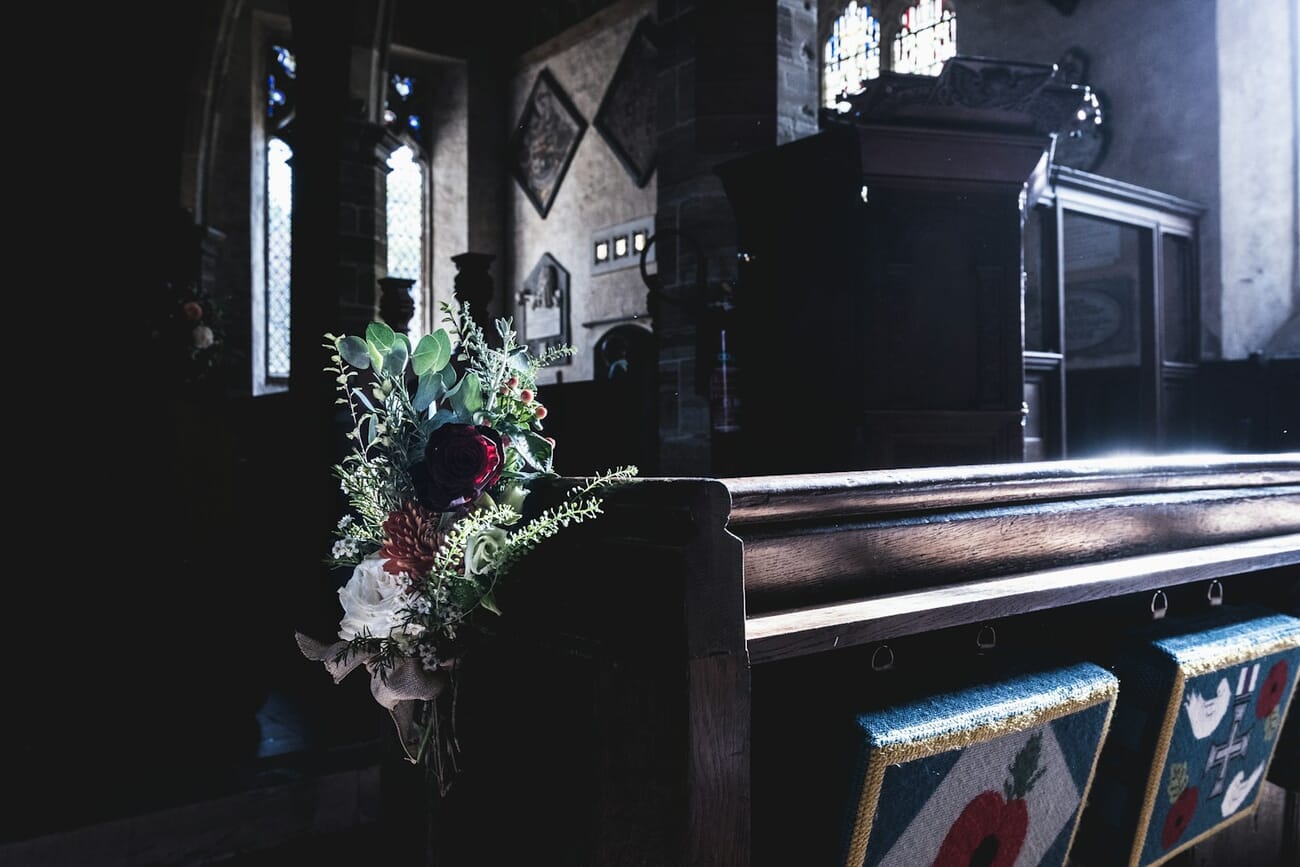
A full-time wedding photographer booking 30–40 weddings per year at $4,000 average can gross $120,000–$160,000. However, expenses are significant: second shooters, equipment insurance, editing software, marketing, and the physical toll of 10-hour wedding days.
Demand outlook: Steady. Weddings are AI-proof — couples want a real human capturing their day. Video is increasingly expected as part of packages (photo + video combos), micro-weddings remain popular, and documentary/candid styles dominate over posed shots. Many wedding photographers now use AI photo editing tools to cut post-processing time in half.
The reality check: Wedding photography is demanding — weekends are gone, peak season (May–October) is exhausting, and you’re dealing with high-stress clients during their most important day. The burnout rate is high. Many shift to other niches after 5–10 years.
6. Real Estate & Architectural Photography
Salary Range: $45,000 – $95,000 annually
Real estate photography offers something rare in this field: consistent, predictable income. Properties need photos to sell, and agents have ongoing needs. The work is technically demanding (wide-angle lenses, HDR processing, challenging lighting) but less emotionally intensive than weddings or portraits.
Typical per-project rates:
- Standard residential shoot (25 photos): $150–$350
- Luxury residential: $400–$800
- Drone add-on: $100–$250
- Video walkthrough: $200–$500
- Commercial/architectural: $500–$2,000+
Demand outlook: Strong. Real estate photography is one of the most recession-resilient photography niches — properties always need to sell, and agents know professional photos sell faster. Adding drone photography, video tours, and Matterport 3D scanning significantly increases per-client revenue. For getting started on a budget, check our guide on how to take real estate photos with an iPhone.
The efficiency game: Success in real estate photography is about volume and efficiency. Quick turnaround times (same-day or next-day delivery) and reliable quality win repeat business. A busy photographer shooting 3–4 properties per day, 5 days a week, can earn $75,000–$95,000 annually.
7. Product & E-commerce Photography
Salary Range: $45,000 – $90,000 annually
The e-commerce explosion has created steady demand for product photographers. Every item sold on Amazon, Shopify, or brand websites needs professional photos — and with AI still struggling to create accurate product representations, human photographers remain essential.
Where the money is:
- Amazon listing photography: $25–$75 per product (high volume potential)
- Lifestyle product photography: $150–$500 per product
- Food photography: $300–$1,500 per image for advertising
- Jewelry/watches: $50–$200 per piece (specialized skills)
Demand outlook: Growing steadily with e-commerce expansion. Product photographers who invest in a proper studio setup with consistent continuous lighting can handle high volumes efficiently — processing 50–100+ products per day for e-commerce clients.
AI note: Product photography is one area where AI assistance is genuinely useful. AI background removal, automated color correction, and batch processing can dramatically increase throughput — allowing photographers to earn more by working smarter, not harder.
8. Sports Photography
Salary Range: $40,000 – $85,000+ annually
Sports photography combines technical challenge (fast action, variable lighting) with the excitement of live events. Staff positions at newspapers and sports organizations provide stable income with benefits, while freelancers can earn more but face inconsistent work.
The equipment barrier: Professional sports photography requires serious gear — fast telephoto lenses ($6,000–$13,000 each), pro camera bodies with high frame rates, and backup equipment. Check our guide to the best cameras for sports photography for current recommendations. This investment keeps competition limited.
Income streams:
- Wire service staff (AP, Getty, Reuters): $50,000–$85,000 + benefits
- Team photographer (MLB, NFL, NBA): $60,000–$100,000
- Freelance event coverage: $300–$1,000 per game
- Youth sports leagues: $100–$300 per event
Demand outlook: Stable. Sports media consumption continues to grow across streaming platforms, social media, and digital publications. AI can’t shoot live events. The biggest growth area is content creation for teams’ social media channels.
9. Photojournalism & News Photography
Salary Range: $35,000 – $75,000 annually
Photojournalism has faced significant challenges with newspaper industry decline, but opportunities still exist at wire services, digital news organizations, and as freelance contributors. BLS data shows publishing and broadcasting photographers earn a median of $28.62/hour — among the highest hourly rates in the industry.
Staff vs. freelance: Staff positions at major outlets offer $50,000–$75,000 with benefits but are increasingly rare. Freelance photojournalists piece together income from multiple outlets, often supplementing with corporate or documentary work.
Demand outlook: Contracting for traditional print, but digital-first outlets and wire services still hire. The documentary path remains viable — many photojournalists transition into long-form documentary photography, securing grants and book deals for passion projects while taking commercial assignments to pay bills.
10. Portrait & Family Photography
Salary Range: $35,000 – $80,000 annually
Portrait and family photography is the most common entry point for aspiring professionals. The barrier to entry is low — a decent camera, some lights, and marketing skills can get you started. But building a sustainable business requires business acumen as much as photography skill.
Two business models dominate:
- Shoot-and-deliver: Session fee ($200–$500) includes digital files. Higher volume, lower per-client revenue.
- IPS (In-Person Sales): Session fee ($100–$300) with separate print/product sales averaging $1,000–$3,000+. Lower volume, higher per-client revenue.
Demand outlook: Steady but competitive. AI headshot generators (like those discussed in our piece on AI headshots disrupting job markets) are taking a bite out of basic headshot work. Successful portrait photographers differentiate through specialization: newborn photography, high-school seniors, professional headshots, boudoir, or pet photography. Need business name inspiration? Check our 250+ photography business name ideas.
AI-Adjacent Photography Roles: The New Frontier
The most significant shift in photography careers isn’t about AI replacing photographers — it’s about entirely new hybrid roles that didn’t exist three years ago. Photographers with technical skills are uniquely positioned for these emerging positions, which often pay more than traditional photography work.
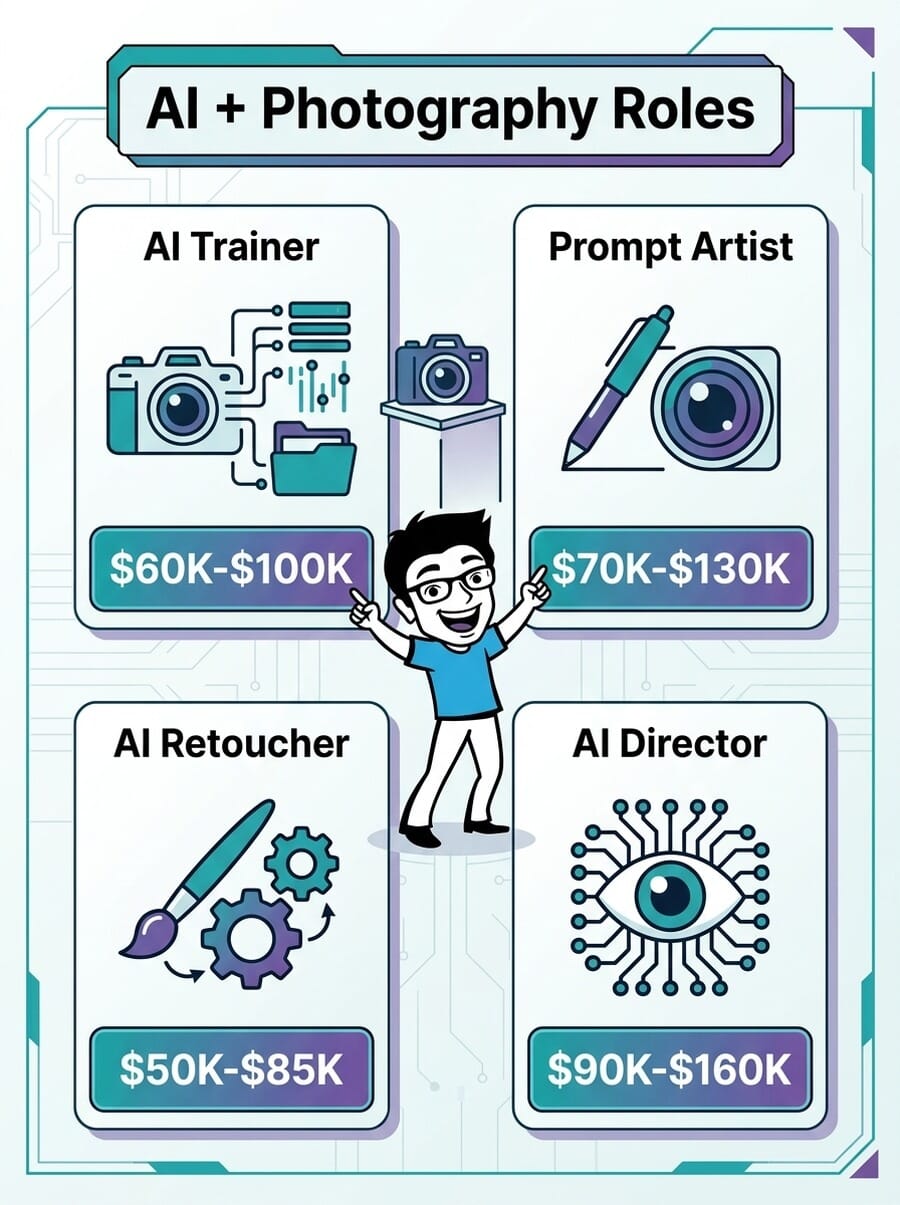
AI Training Data Photographer ($60,000–$100,000)
Companies building AI image models need massive datasets of professionally shot, well-labeled photographs. AI training photographers capture specific scenes, objects, and lighting conditions to train visual AI systems. This role requires traditional photography skills plus an understanding of what makes training data valuable — consistent labeling, diverse angles, controlled variables.
Major tech companies and AI startups hire for these roles, often on contract at $50–$80/hour. Some photographers supplement their regular work with ongoing AI training data contracts.
Prompt-Assisted Creative / Visual Prompt Artist ($70,000–$130,000)
The “AI creative director” or “visual prompt engineer” role specifically seeks people with photography and visual arts backgrounds. Knowing how light works, understanding composition, and having a trained eye for what looks “right” makes photographers uniquely qualified to guide AI image generation. According to Glassdoor, prompt engineers with creative specialization earn a median of $126,000–$139,000 annually.
These roles exist at advertising agencies, e-commerce companies, and media organizations that use AI-generated imagery for marketing materials, product mockups, and conceptual work.
AI-Enhanced Retouching Specialist ($50,000–$85,000)
Rather than replacing retouchers, AI has created demand for specialists who can supervise and refine AI retouching output. Companies like Bloomingdale’s and Abercrombie & Fitch actively hire retouchers experienced in AI-assisted workflows. The role requires traditional retouching skills (color grading, skin work, compositing) plus proficiency with AI tools to achieve 3–5x faster turnaround.
AI Creative Director ($90,000–$160,000)
The highest-paying AI-adjacent role bridges creative vision with AI capabilities. AI creative directors manage visual identity across AI-generated and human-shot assets, ensuring brand consistency. They need deep photography knowledge to evaluate whether AI output meets professional standards — and to know when a human photographer is the right choice instead.
Nearly 45% of visual arts programs have updated their curricula to incorporate AI tools, signaling that these hybrid skills are becoming industry standard, not niche.
Freelance vs. Salaried: Income Benchmarks
One of the biggest decisions in a photography career is whether to go freelance or seek salaried employment. The income gap is significant — and the trade-offs are real.
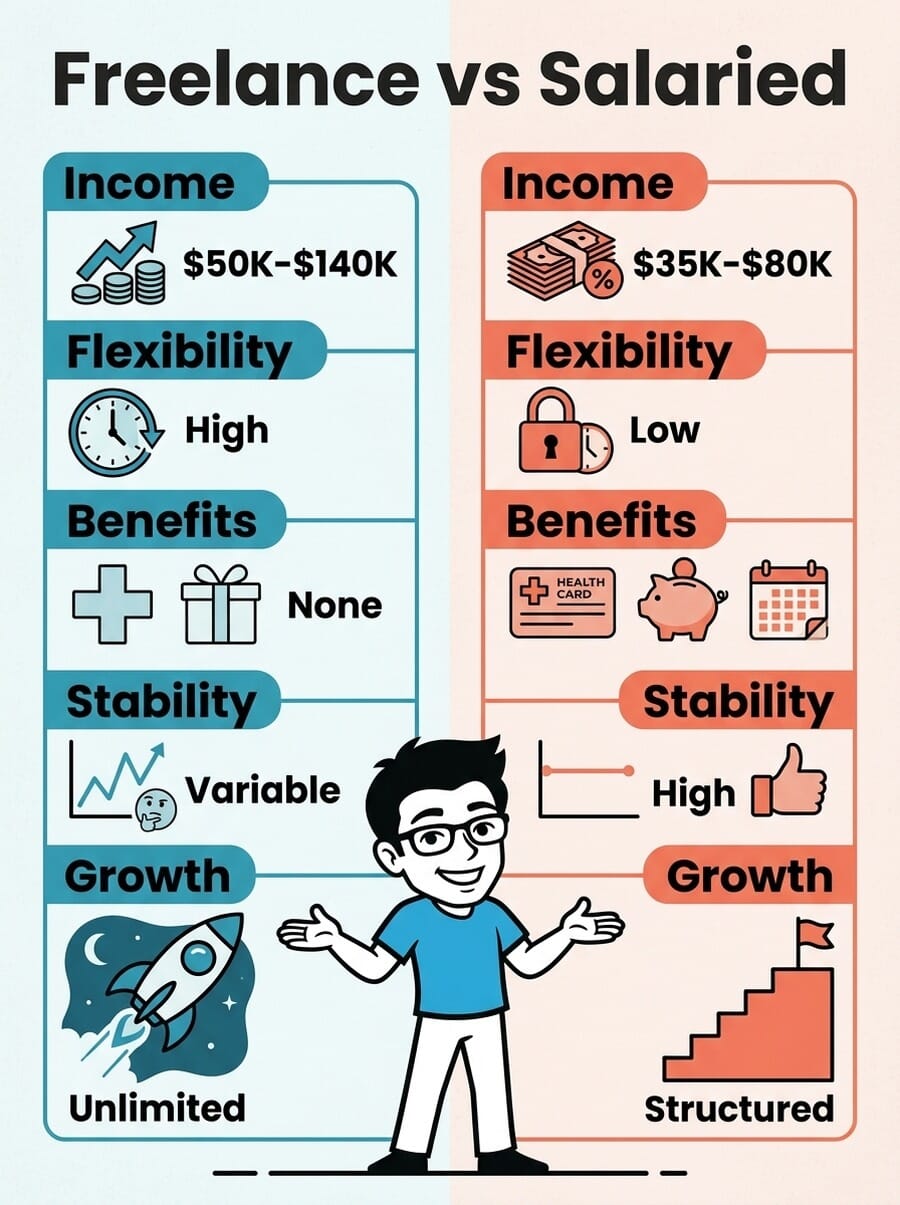
Freelance Photographer Income
- Average annual income: $66,000–$75,000 (Glassdoor/Salary.com data)
- Top freelancers: $100,000–$140,000+ (ZipRecruiter top quartile)
- Average hourly rate: $32–$55/hour depending on specialization
- Trade-offs: No health insurance, no retirement match, no paid time off, income volatility, self-employment tax (15.3%)
Salaried / In-House Photographer Income
- Average annual salary: $35,000–$68,000 depending on employer size
- Benefits value: Health insurance, 401(k), PTO typically add $15,000–$25,000 in total compensation
- Best-paying salaried sectors: Medical/hospital ($55K–$90K), corporate ($50K–$75K), government ($45K–$65K)
- Trade-offs: Lower earning ceiling, less creative freedom, fixed schedule
Remote Photography Work
While shooting itself requires being on location, several photography-adjacent tasks can be done remotely: photo editing, AI retouching, stock photography curation, photography education/coaching, and e-commerce product photography (with a home studio). Indeed listings show growing demand for remote photo retouching positions, typically paying $40,000–$70,000 for full-time roles.
The most lucrative remote setup? Combine on-location shooting 2–3 days per week with remote editing/business development the rest. This hybrid model is increasingly common among photographers earning $80,000+.
Career Path Spotlight: Two Routes to Six Figures
Understanding salary ranges is useful, but seeing how real careers develop is more instructive. Here are two common paths to high-earning photography careers:
The Commercial Photography Path
Years 1–2 (Assistant, $25,000–$35,000): Start as a photo assistant to an established commercial photographer. Learn lighting setups, client management, and studio workflow. Build relationships with art directors and producers. Invest earnings in your own equipment.
Years 3–5 (Freelance Specialist, $45,000–$75,000): Launch your freelance business in a specific niche — food, product, or corporate. Take on smaller clients while building a portfolio that attracts larger ones. Learn licensing and usage rights negotiation.
Years 6+ (Established Commercial, $80,000–$160,000+): Secure retainer clients, command premium day rates ($2,000–$5,000+), and earn significant licensing revenue. The most successful commercial photographers at this stage earn more from image licensing than from shooting fees.
The Hybrid AI + Photography Path
Years 1–2 (Photographer + AI Learner, $35,000–$50,000): Build traditional photography skills while learning AI tools — generative models, automated editing pipelines, prompt engineering. Start with freelance photography while taking on AI-related contract work.
Years 3–4 (AI-Enhanced Specialist, $60,000–$90,000): Position yourself as a photographer who can also manage AI workflows. Agencies and brands pay premium rates for professionals who understand both worlds. Remote work opportunities expand significantly.
Years 5+ (AI Creative Director, $90,000–$160,000): Lead visual identity across AI and human-created assets. The photographers who reach this level understand photography deeply enough to know when AI output falls short — and have the technical skills to bridge the gap.
Both paths share a common thread: the highest earners treat photography as a business, not just an art form. Business skills — marketing, negotiation, client management — matter as much as creative skills. If you’re just starting out, our photography tips for beginners covers the fundamentals.
How AI Is Affecting Photography Careers
Let’s be direct about AI’s impact on photography:
Areas where AI is displacing photographers:
- Generic stock photography
- Basic product photos on white backgrounds
- Social media filler images
- Simple illustration-style commercial work
- Basic headshots (particularly in markets like South Korea)
Areas where AI cannot compete:
- Events (weddings, sports, news) — requires physical presence
- Portraits of real people — authenticity matters
- Brand photography with specific products/locations
- Real estate and architectural documentation
- Medical and scientific photography
- Drone/aerial work — requires on-site operation
The photographers thriving are those who position themselves where human presence, judgment, and creativity cannot be replicated — while using AI tools to work more efficiently. For a deeper analysis, read our full guide on how AI is changing photography jobs and workflows.
How Much Do Photographers Earn on Average?
According to the U.S. Bureau of Labor Statistics (May 2024 data):
- Median annual wage: $42,520 ($20.44/hour)
- Bottom 10%: Less than $29,600/year ($14.23/hour)
- Top 10%: More than $94,765/year ($45.56/hour)
PayScale data shows an average hourly rate of $24.04, with total compensation (including bonuses and commissions) ranging from $33,000 to $125,000. Glassdoor puts the average photographer salary at $59,401, reflecting higher-paying urban markets in their sample.
Pay by industry (BLS May 2024):
- Publishing, broadcasting, and content providers: $28.62/hour
- Retail trade: $18.41/hour
- Arts, entertainment, and recreation: $18.13/hour
- Photographic services: $18.08/hour
Location matters: Photographers in major metropolitan areas (New York, Los Angeles, San Francisco) earn 25–40% more than the national average, though cost of living often offsets the difference.
For the most current data, visit the Bureau of Labor Statistics Photographers page.
Frequently Asked Questions
What is the highest paying photography job?
Commercial and advertising photography offers the highest earning potential, with established professionals earning $65,000–$160,000+ annually. Licensing fees from national campaigns can significantly boost income beyond the shooting fee. AI creative director roles are also emerging as top earners at $90,000–$160,000.
Can you make six figures as a photographer?
Yes, but it requires specialization and business skills. Wedding photographers booking 30–40 weddings at $4,000+ average can gross $120,000–$160,000. Commercial photographers with strong licensing deals regularly exceed $100,000. The key is treating photography as a business — not just relying on shooting skills.
Is photography a good career in 2026?
Photography remains viable but requires strategic positioning. The BLS projects 2% growth through 2034 with 12,700 annual openings. Niches requiring physical presence (events, real estate, medical) are most secure. Photographers who integrate AI tools into their workflow and specialize in areas AI can’t replicate are best positioned for long-term success.
Do freelance photographers make more than salaried ones?
On average, yes — freelance photographers earn $66,000–$75,000 compared to $35,000–$68,000 for salaried positions. However, freelancers sacrifice health insurance, retirement benefits, paid time off, and income stability. When you factor in the value of benefits ($15,000–$25,000/year), the gap narrows significantly.
What photography skills are most in demand?
Beyond camera skills, the most in-demand abilities are: drone operation (FAA Part 107), video production, AI tool proficiency, business development/marketing, and lighting expertise. Photographers who combine traditional skills with technology literacy command the highest rates.
Conclusion
The photography industry rewards specialization, business acumen, and adaptability. While the median photographer earns around $42,500 annually, the top earners in commercial, drone, wedding, and emerging AI-adjacent roles regularly exceed six figures.
Key takeaways:
- Specialize strategically: Choose a niche where demand exceeds supply and AI can’t easily replace you.
- Think beyond shooting: The highest earners understand licensing, marketing, and client relationships.
- Embrace AI as a tool: Use AI for editing, culling, and workflow automation — don’t compete against it.
- Consider hybrid roles: AI training photographer, prompt artist, and AI creative director roles offer competitive salaries for photographers with tech skills.
- Build multiple income streams: Combine shooting with education, licensing, or related services for stability.
Choose a specialization you genuinely enjoy — burnout is real in this profession — and build a sustainable business around your strengths.
Featured image: Photo by Vitaly Gariev on Unsplash.